Balancing Traditional Values in the Modern World
This is a reupload from Arctic Canada - The Culture Cure.
Transcript
Welcome to Arctic the Culture Cure, the podcast all about Canada's Arctic, the climate, the animals, the land, the people, the culture and what it can teach the rest of the world. I'm your host, Rob Fagan. Brent Nakashuk lives in Ikliktutiak, or Cambridge Bay, as many people still call it, in the territory of Nunavut in Canada's Arctic. Cambridge Bay is on Victoria island in the Arctic Ocean and has a population of about 1,700 people. Brent is a traditional Inuit hunter. However, he also works at a mine site that he has to fly to when he goes there for a shift. However, you know, Brent manages to balance his life and maintain his Inuit culture as well as working at the mine. Welcome, Brent.
Speaker B:Thank you, Rob.
Speaker A:It's great to have you. I don't know why I'm having some difficulty and I don't mind saying this, pronouncing ikliktutiac, even though I used to live in Cambridge Bay and I usually never have trouble pronouncing, but I have it. How would you say it?
Speaker B:You're saying the tu part twice where there's only one.
Speaker A:Yes, Ikilaktu chiak.
Speaker B:Actually, yeah, there's one. Te.
Speaker A:Yeah, I don't know why I'm having trouble today saying it.
Speaker B:Yeah, no problem.
Speaker A:So, Brent, thank you very much for coming on the podcast. And what kind of a day are you having in Cambridge Bay today?
Speaker B:It's pretty clear and fairly cool, but I guess it's seasonal for about this time of year, so about normal. And I guess you could say it's nice because it's not storming or it's not overcast. Usually weather like that makes it hard for us to travel and stuff, but we get her done when we have to.
Speaker A:Yeah, you bet. Now you. I guess it's just been a few weeks now that the sun has been back, so, you know, you've moved from 24 hours of darkness with some daylight. Now, what time is the sun coming up roughly? And. And what time is it going down?
Speaker B:Yeah, we start to see the horizon Change color about 6am, 5:30, 6am It'll start to turn to twilight. And then right around 8 or so, 8:30 it'll be sun up there and sun goes down right around 4:30ish, 5 o', clock, and then by about 6 it's kind of completely dark there.
Speaker A:So, okay, so you've got a lot of sun back. I mean it comes back fast. You forget when you don't live there for a while, but
Speaker B:yeah, it does change quickly. It seems, it seems to drag on going in. Like when it starts, when the daylight gets shorter and shorter, it seems to take forever. But then once the sun starts to come back, before you know it, it's springtime and the sun's always up all
Speaker A:the time, so just incredible. Yeah. Friends of mine have been sending me pictures as the sun's coming back and some of the colors have been just amazing. Just amazing.
Speaker B:Yeah, we actually, we were out late. I just got back from a trip yesterday. We were out for about a week on a polar bear hunt. No, no polar bear to say we caught, but we had a good trip. We had some issues, mechanical weather and stuff. But that's, that's all par for the course. That's, that's stuff we deal with on a regular basis. But as far as the hunt goes, we had a lot of weather issues and mechanical failures that kind of hindered our. We'd rather be out there looking for our animal rather than dealing with that kind of stuff. But that's, that's the nature of the issue. We deal with that sometimes it's more than we'd like for it to be. In this particular case, we were mostly spending our time on that and not really doing too much. We did a bit of hunting. We had a few days in there. The animals weren't out and about when we were there, so we ran out of time with our tags. We have a time limit on the polar bear tags. Gave us 10 days to get the hunt done and we ran out of time. And then the weather and stuff, we had to come back and basically pass those tags on to the next people down the list. So, you know, it happens. I mean, I go almost every year, so you'll, you'll expect some of these trips will come back empty handed. I'm okay with that. I mean, I've learned to be able to deal with that kind of stuff.
Speaker A:So maybe just. So if you know people who aren't from the Arctic who are listening, Brent, just give us a bit of an idea. So you, you'd head out on skidoo, on snowmobile. And how many days roughly were you out there, did you say?
Speaker B:We were out about a week. We had a few days to get ready. We don't like to rush getting ready because it's a big trip, especially for us in Cambridge Bay. Our polar bear hunting areas are a good hundred plus miles away. So you have to plan to be out for a while.
Speaker A:Yes.
Speaker B:Yeah. When you're talking about other community like Resolute or communities over in the Hudson Bay area, those guys can travel on a day trip and start seeing bears, you know. But over here, we have to plan to be out for at least four to four days to 10 days, two weeks sometimes. I've been gone 15 days sometimes just trying to find one bear. Right.
Speaker A:So you're out on the land, you're. And it's tundra, it's winter, it's cold. I was watching the weather, and I think you. You talked about the weather being bad at times. I know there was recently a big storm in Cambridge and temperatures, you know, down in the minus 30s, you know, and with the wind chill factor. So a lot of people like to wonder, okay, so they're out on the land for, you know, over a week. And do you sleep in a tent at nighttime or how. You know, what. What did you use for accommodation when you were out there?
Speaker B:Well, it depends on the direction we're going. We have two hunting zones for Ikaluktu Chak, and one of them is straight north to the top of the island to a bay called Hadley Bay. And that has a tag system with three tags. For us every year, that's a little bit more of a travel there. I think it's about 200 miles until you can start to see some bears from Cambridge Bay. There's no cabins up that way just to use while you're hunting. So that. That is all tent or igloo or whatever you want to use. But the other location we have is shared with three communities, and that's on the McClintock channel to the northeast. And we get four. Four tags from there every year. So that's the direct. That's the direction we went on on this hunt. And there is actually a cabin out there. I usually use that cabin. We didn't reach this time due to rough ice and time restraints and stuff. But there is a cabin owned by the local HTO that is set up there. It's a 12 by 12. You can. You can hold four people in there comfortably. And we actually had six on this trip. So we're okay with staying intense.
Speaker A:Intense. Okay. Now, I know, Brent, you've managed to maintain your culture and things, so some of the time when you're out, you would. If the. If the conditions were right and so on. And you'd still sleep in an igloo overnight.
Speaker B:I would. But to be honest, an igloo is more of a safety. More of a. Like an emergency shelter for myself. You can't dry anything in there. It's not as comfortable it's not roomy enough for the kind of stuff we like to cook. And we like to do stuff. When you're cooking with a hot stove and you're producing steam and all this heat, you would melt an igloo and it would start to cave in on you if you, if you heated it up too much like that. But for as far as shelter and safety, it's not a bad place to be out of the wind. If you're not going to be there very long, then it's. It's a good option. But. But if you're looking at cooking food and then being set up a little comfortably, a tent is really the way to go because you have more area, you can. You can get the heat going really good and dry your stuff out and stuff like that.
Speaker A:And people, people forget about that because, I mean, you're dressed very warm, you're out, you're traveling on, whether it's ice or snow, and you sweat inside of the warm clothes. And it is important to be able to dry those clothes out when you've stopped to camp and so on. So having the heat in the tent. So you'd have a naphtha heater.
Speaker B:Yeah. We use Coleman stoves. It really hasn't changed since I was a child. We tried different options here and there, but we always go back to the old trusty Coleman stoves. And then we notice manufacturing flaws here and there. When, like a few years going back, there was issues with some of the nozzles that come out. They get loose. They change batches from time to time. We start looking for the older Coleman stoves that are now vintage. Those are more reliable because these newer ones, I don't know if they use cheaper materials or something, but they don't burn the way they used to.
Speaker A:That's often the case, isn't it? You know, they try to improve some of these things over the years, and it's really the original model that works best of all. And if you're out in extreme climate stream cold, you need something you can rely on, that's for sure.
Speaker B:Yeah. Yeah. One of the. One of the guides that I was camping with showed me the issue with these newer Coleman stoves. He said there's a. There's a waffle baffle system inside the burners that he said you have to add more baffles to it. And then he said you can turn it lower because the problem is you can't turn it low without the whole fire going out.
Speaker A:Okay.
Speaker B:So there's not enough air mixture to it or something.
Speaker A:Yes.
Speaker B:So you can we learn how to fix things. Even we fix the manufacturer's problem sometimes out here.
Speaker A:You know, that's one thing that's amazing. I grew up in the Western Arctic. Then, you know, Cambridge Bay, very different. It was my first time living someplace where it was tundra, not trees. But something that, you know, something that really amazed me is just the ingenuity of Inuit people when it comes to fixing things, whether it's a snowmobile, a stove, whatever. It's just amazing what people. You know, I think MacGyver, the old TV show MacGyver, I think he actually must have learned from Inuit people how to fix things.
Speaker B:Yeah, well, yeah, the Inuit people are pretty proud of their heritage and history because we all know the inventions of Inuit in the past. There's a long list of inventions that go back to the Inuit people, like the kayak and the bows. I don't know who invented them first, but we all know that they had these tools to live in this harsh climate. Right. So, yes, what we always say is, you know, when you buy something new, what an Inuit hunter will do is he'll start to rip it apart and he'll make these changes to it right out of the box before these issues come up.
Speaker A:Yeah, no, that's neat. And again, that's something that I marveled at when I lived in Cambridge Bay. You mentioned, you know, the old Coleman stoves from when you were young, you know, still work best now. At what age did you start to go out on the land and start to learn how to hunt and things like that?
Speaker B:I really can't put an age to it because I was actually adopted to my grandparents from birthday. So basically they, they were completely old school. They were before the residential school. They had no knowledge of any of that. I mean, it was my, my siblings generation that was all into residential school. I completely missed it. I, you know, it was after my time, but I grew up with them. They didn't know English and I don't know which language I knew first. I'm assuming Inuit. Nachtun was my first language. But to be honest, I must have been out on a land right out of the gate because I remember being out there four or five years old, and they like to be out all summer. Eh. So ever since my first memory, we were out for three months every summer. So I was probably out there in diapers. I'm pretty sure of it.
Speaker A:That's, you know, incredible experience. And to grow up, as likely your grandparents did, you know, on the Land. I. Oh, are you still there, Brent?
Speaker B:Okay, so I think I lost you first.
Speaker A:Yeah, we're back. That's great. So what would be some of your first memories of being out there with your grandparents in the land? Is there any particular experience that kind of stands out in your first memories of being out there and living on the land and hunting and so on?
Speaker B:Yeah, I don't know. I've. There's quite a few memories that. That always come back. There was one where I must have been three years old, and we're out at a fishing camp. And back then I was free to roam wherever I can go. There was. There was no dangers to think of. So basically I just wandered around close to camp where I can see the camp, just exploring. And I got one of my boots caught in a mud patch there, and I couldn't get it out. And I ended up walking back to camp without that boot, and I went back with an adult to try and find it, and we couldn't find it, so. And then the next year, I come back a little older, a little stronger, and I come across this boot in the mud. I'm like, what. What's this? I don't remember it getting stuck. I pulled it out of the mud like nothing, and I brought it to camp. And then the other side was still there, but they were too small for me by that point.
Speaker A:Oh, that's funny. Now, your grandfather, I understand. Is your grandfather still living?
Speaker B:No, he's passed away about five, six years ago. My grandmother just passed away last year, a year and a half ago now. But yeah, they were. They were up there in their 60s, 50s and 60s when they adopted me. So they were about 80s, 70s and 80s when they passed away.
Speaker A:And I understand your grandfather was a bit of a famous polar bear hunter himself.
Speaker B:Yeah, he was a guide. He did sport hunts in my earlier years, like when I was a kid, actually got to experience a little bit of his work. Right. When I was about eight years old, there was a transition period where there was a. There was a chartered flight going up that was empty. My grandmother and I were invited to hop on that flight and go and see him to close up shop for his season and then bring the dogs back. Yeah, it was an amazing trip. That's another one that stands out for me as a child was we flew up on Adelaire Twin Otter to Hadley Bay, and my grandmother had a polar bear tag to her name at that point. And so it was kind of a perfect thing. We get to fly up there first class and do the, do the polar bear hunt and bring, bring all the equipment back. It was about a five day trip coming back to Cambridge Bay. The dogs ran the whole way. We just let them loose and they follow the snowmobile tracks. And we actually lost a couple of them dogs on the way home. And a story that comes back is two of them were gone for a few years. One of them made it back to town after three years and was still in pretty healthy shape there on his own devices. Must be surviving on ptarmigans or whatever. Pretty sure this dog must have mixed in with some wolves too. I mean, that's, that's kind of probably what happened right there.
Speaker A:Yeah, that would, that would help it get through over that period of time. That's amazing. So what, again, to give people a bit of a sense, you've mentioned hunting polar bear. What other animals do you hunt when you go out? Whether it's, you know, winter or summer? What are, what are the different game animals that you hunt?
Speaker B:Yeah, we got muskox all around the island here. We used to have lots. Right now the, the herds are kind of on a decline. The past ten years or so they've been battling with some diseases. There's been some. The predatory factor is a little higher right now. There's, there's more wolves these days. There's more grizzlies. That's something that we've been hoping to get looked at by the government or whoever can step in and help us to deal with this issue. But yeah, the caribou are suffering. We got caribou too, but we're starting to have to travel a little further for the caribou also, you know, we got arctic hare, ptarmigan, there's seals here and there. We got bearded seals and ring seals. We don't get whales too often, but we've been seeing some whales odd years. We'll see some whales come through. Not as many as other places, but they do come through once in a great while.
Speaker A:Would that be boho or beluga?
Speaker B:Beluga sometimes, and also narwhal.
Speaker A:Oh, okay. Yeah. So the, the muskox numbers are going down a bit. And you say also the, the caribou. Now that would be the Perry island caribou, correct?
Speaker B:No, these are not Perry island per se, but they're, they are island caribou. But Perry caribou are a little smaller compared to these ones.
Speaker A:Okay.
Speaker B:We just call these island caribou because next to a mainland caribou, they're not as big.
Speaker A:Right.
Speaker B:So there's A subspecies in between the Perry caribou and the mainland caribou that we have as our own island caribou.
Speaker A:Yes. Okay.
Speaker B:Somebody mentioned that they might be a hybrid of the Perry and the mainland, and then it just turned into its own species, I guess, or whatever, but I'm not exactly sure. We just call them island caribou.
Speaker A:Yeah, a lot of people don't. When I've told people about those island caribou, a lot of people don't realize. They just think of, you know, barren land caribou. They don't realize there is that. That other species that you'd find up around. Around Cambridge Bay. Now, on the fishing side, char, I guess, to be the landlocked and the char that also go back and forth between the ocean and the freshwater.
Speaker B:Yeah, yeah, we got arctic char here. Actually, I took part in some meetings with the DFO over years, and they actually invited me over to one of their big meetings in Winnipeg where their headquarters are. And we went over all the stats going back to the 60s when they started recording catches and all this and that, and quotas and stuff like that. And they actually had a tally of the entire poundage or the weight of the product that came out of Cambridge Bay. And. Which was quite stunning because my grandfather and my grandmother were always in the fishing industry probably right from the beginning, a Right when it started. And they said that Cambridge Bay has produced over 2.3 million kg of Arctic char to the world market since then, sustainably. You know, they've done it so that the numbers are still strong. And, you know, and I think part of that is due to our geography. We have quite a good area for the fish to like. There's lakes. Seemingly every half mile you got lakes, or even. Even more than that. It's just an island covered in water, you know, and there's just. There's some big lakes with really big numbers of fish in them. More notably Ferguson lake, which is 40 miles long by 10, 10 miles wide. There's a quota system there for up to 40,000 pounds of char every year.
Speaker A:Okay.
Speaker B:And then there's another lake northeast called Jayco. It's about half the size, roughly, and it has a big lake system attached to it, which probably comparable to that size if you add it all up. And there's a total of about a hundred thousand pounds that we produce every summer here.
Speaker A:And that's sent south. The char that is harvested there, a
Speaker B:lot of it, most of it is. Most of it is sent south. We have it all in freezers. Here, and it's available on order. You just. You can probably do it all online. Go to kiddermute foods.com or something. And Cambridge Bay will come up and they have stuff like candy, char, char jerky, whole dressed smoked character. Just a bunch of different products with the arctic char that we produce out of here.
Speaker A:Well, that's beautiful. And so there's char, there'd be trout. What other species of fish would you get in around Cambridge Bay, the area?
Speaker B:Yeah, we got trout, lake trout and whitefish. I think there's quite a few different species of whitefish. I don't know exactly how many. There's probably three of them that I know of for sure that different sizes and different shapes, but they all look basically like the same whitefish. And there's also lingcod. I think there might be turbot or halibut, but we don't get them in great numbers to actually harvest them. I've been trying to get some halibut. I don't know how to do it. I mean, it's a new type of fishing, but I was told that there's some in the area. But I'm gonna keep trying and try to figure it out because it would be some. Definitely some. Some good eating there, for sure. I've had halibut before, so I know it's pretty good fish.
Speaker A:Good fish, yeah. Now, that's one thing I was gonna ask you, Brent, is I've heard that in some other areas they're seeing different species of fish, for example, than they used to, and they're thinking that maybe that's part of climate change happening and so on. What have you seen? You know, you're out on the land a lot, whether it's in winter or summer. What are some of the changes, if any, that you're seeing in the climate and the animals and their patterns and behaviors?
Speaker B:Yeah, we get some different species both in the water and on land once in a while. I know a few people that have gotten some salmon caught in their net here and there. Not in great numbers, like I said, but just you get the odd one here and there. Who knows if they've been around for a while. I mean, we've only really started recording things like this recently. Right.
Speaker A:It's a little.
Speaker B:Getting a call there. I'll back anyways. Yeah, there's things like moose. Buddy of mine just got some moose to the south 90 miles and a friend of mine got one a few years ago, half that distance. So we're starting to see stuff like that. Grizzly Bears are moving more into. I mean, I think they've probably always been here, but we're starting to see their numbers going up around here. Waterfowl too. We see some different birds coming around. Can't really say a name of what kind. We're seeing that, that's not normal for here, but we see the odd different ones here and there. There's too many different kinds of birds for me to really pinpoint what kind.
Speaker A:Yeah, you know, people. I've heard people talk about an increasing population of grolar bears, you know, the grizzlies and the polar bears. I mean, do you see any of that around the Cambridge Bay area?
Speaker B:Yeah, I'm still hoping to spot one of those. I haven't seen one, but my. One of my brothers, he said he thinks he's. He's seen a track of one. He can't say for sure, but he said it didn't look like a polar bear track and it wasn't. It wasn't season for grizzlies to be out, so he thought it might be something, maybe a hybrid. Yeah, he said it's hard to say that it could just be a different polar bear track. I mean, just like anything else, there's different variations in species. Some, some are smaller, different shapes. He's even caught a big polar bear with small paws. He said the paws on it looked like they came from a seven footer, but the bear itself was probably close to 10ft.
Speaker A:Little Foot instead of Bigfoot.
Speaker B:Yeah. Yeah, I guess.
Speaker A:Yeah. So a little hard to tell then, I guess whether there's big changes happening with the different animals. I mean, it sounds like once in a while there'll be something unusual, but a little hard to tell. Maybe the patterns with the grizzlies is a little more obvious than some of the others. And how about the temperatures or the length of winter? You hear that discussed a lot. Have you seen much change there?
Speaker B:Well, it's kind of. It's kind of weird because, you know, we'll get some years that are pretty average. Like I'd say this year is kind of average, maybe colder than normal. But then probably 10 years ago or so we had a very mild winter. I think it stayed around the minus 20s, which is mild for us. But as far as changes go. Yeah, we got a little bit of a variation happening. As far as weather, I'm not too sure exactly what's different because I've only got probably 20 to 30 years of my own memory to draw from to say what it was like. But before that I think people said that we had a lot of clear weather before my time and there's more frequency of changed weather these days going talking to some of the older folks there. But this, this summer, this past summer that we just had was a colder summer than average. But everyone's been saying, and I kind of agree with that because it seems short, the spring was delayed, it happened later than normal. We're actually out on the snowmobiles in July, if you can imagine that, on the ice and it was still fairly safe. So yeah, I don't know, we got some changing weather patterns going on. Warmer, colder, it goes both ways, you know. So yeah, so climate change is definitely real for us. We're seeing, we're seeing both warmer and colder temps happening at different times.
Speaker A:So it's not a steady warming. It's just kind of a little bit more unpredictable I guess than perhaps it used to be.
Speaker B:Yeah, yeah, I would say that. Who knows, we might get a streak of 10 years where it'll just go back to what it's normally been. But when I was a child, like between the ages of 5 and say 15, we were used to getting storms that would last like a good four or five days. The whole town would be shut down. Here we'd be lucky to see one go two or three days at the very most. Then we had some years where storms only come for half a day and then it would clear up a few days and then it would go for another six hours and then clear away.
Speaker A:Well, I sound like the old man telling stories, but I lived in Cambridge Bay, it's got to be, oh, let's see, likely 26 years ago now that I lived in Cambridge Bay and that part of my memory is those storms, you know, that were white out type of storm that would last three, four days at a time, you know that they, you get that length of a storm. I can remember that clearly.
Speaker B:Yeah, yeah.
Speaker A:So you.
Speaker B:Yeah, we used to, when I was a kid, we used to, we used to love those days where it's just storm. We'd be outside doing it, we'd play, we'd shovel out tunnels and stuff and we'd be on hills, we'd be playing around. It just seemed milder. A. It was, it was easier to tolerate the wind and stuff. Yeah. When we were, when we were kids, we used to always pick up a bunch of our friends and go and hang out in the storm, eh?
Speaker A:Yeah, lots of fun.
Speaker B:Now I don't see our kids, my kids don't really do that. I'm like man, it's storming guys inside. You know what's going on.
Speaker A:So you work at a mine and you have to be, you have to fly, take a. Is it a charter or just regular flight out? And how far, where do you have to go? Like how far away from Cambridge Bay?
Speaker B:Well, the mine I work at is actually driving distance from here by snowmobile, but, but I would, I prefer to fly because it's less hassle and it's free. I mean the mind brings you there and back. Right. So. But I kicked the idea around about driving there and back because I have driven there before and I guess it just turns out to be a little bit more inconvenience for them because they said when I. When a hunter comes in, there's a procedure to follow. You have to call in from a shack that's outside the skirts of the mine there and you have to surrender your gun and go through all this whole process of intake and stuff. Just seemed like a bit of a hassle to me. And then they said there's no real driving around in the site there with your equipment. You just kind of have to steer clear. It's. I guess it's a secure location. I mean it's a gold mine. You didn't want people just coming through there with guns and stuff and.
Speaker A:Right.
Speaker B:You know, so I just kind of figured, okay, well I'll just, I'll just do the normal flying in and out. It's. It's not bad. I don't mind that there's some cabins between here and there too. So it's about 80 miles from Cambridge Bay which turns out to be a 20 minute flight.
Speaker A:Okay.
Speaker B:So yeah, it's pretty close to here.
Speaker A:How long are you out there? Like how long are your, your shifts when you're out for like, is it kind of like two weeks out and then back?
Speaker B:Yeah, yeah. I'm on a two and two rotation and I have a cross shift who's zero and I'm not.
Speaker A:Okay. You know, that's a pretty dramatic shift. I mean you're at home and you're with your family and you have the ability to head out on the land and engage in your traditional activities. Then all of a sudden you're at a mine, you know, in, you know, in your quarters there for the two weeks. How difficult is that to make that shift?
Speaker B:Yeah, I'm still getting used to the whole process for me. I'm used to being my own boss. For the last 15 years I've done subcontract work Guiding and commercial fishing. You don't answer to anyone but yourself. A, you, you do a job, you get it done, and then that's it. You get your paycheck and you continue on Here. You get a list. You get a to do list from a boss and basically tell them how much you got finished during the day and what kind of issues you came up with. That's not the part I'm struggling with. I don't mind doing that. I've had jobs before in town where I, you know, have to do similar stuff. But the part that I'm still adjusting to right now is that staying consistent with the two weeks, like being away from my family for two weeks on a regular basis and then trying to make plans of getting all my. My own affairs done while I'm at home for the two weeks and trying to make things fit into that slot right there where I'm at home. And you kind of want to have some time to rest too. Like, I mean, being at work, you need to take a little break from everything once you get home. So I. There's usually a couple a day period where I just get home and I don't make any plans, I don't do anything. I just kind of relax and hang out with the kids and stuff. And then leading up to when it's time to leave, it always seems like I'm rushing to try and finish things up before I go back to work, you know.
Speaker A:Yeah, no, that's a. That's a tough schedule to keep up and keep going ahead and do you find it's hard to kind of. You've been on a regular shift working every day. When you're there for the two weeks, do you find it's kind of difficult to kind of get your mind to just relax and go back into, you know, you went on a polar bear hunt this time when you were home. It's difficult to shift gears into that mindset to head out onto the land. Or is that easier? That might be the easier bit when you get back home to go, ah, now I can do that. Instead of going, oh God, I have to go back for two weeks to the mine.
Speaker B:Yeah, I think most of it. Is my heart in the whole game. Like, am I. Can I see myself doing this for 20 years until retirement? I don't know yet if I'm gonna really commit to this job in that way. Right now I'm kind of using it to get us by. We're renting right now. We're renting a place in Cambridge Bay Right now. And we've been kicking around the idea of the amount of rent we pay here. We should really be mortgaging a home. Because paying rent is just. You're paying someone else's bills there. So we started making plans to go into a home and buy a home and start paying into that rather than renting a place. Because we kind of feel like we're wasting all our hard earned money that we, you know, we sacrifice for. Yeah. So basically the whole mining job is to get me and Shelly, my partner there to get into our own home at some point. Once we get that sorted out. I'm more of a like I like to be out on a land. I mean that's. That's where I grew up. That's what I like to do. And switching that to work underground. You know what? Underground is not so bad either. I'm not going to say that there's anything that really anything too negative to say about that. I mean work is work. They pay us really good underground. I mean it's probably the best thing for me to be at aside from what I'm used to doing. Normally doing sport hunts and commercial fishing. You got these two or three week periods where you're steady at work and then you get a nice payout and then you're off work for the next three months. That's kind of the system I'm used to. Because I'm free to do whatever I want for those three months. Usually I maintain my equipment. I bring my stuff inside and I work on everything. Get it ready for the next go around. Which is kind of where I'm struggling right now. My machine is out there broken down because I don't have the time to really focus on it and get it tuned in the way I need it to be. Because I'm at work when I'm not home. Right. So it's. Yeah it's. I'm still struggling with it. I mean I'm gonna have to give up some things if I'm gonna start looking at the mining thing to be a more long term thing for me. I'm gonna stay at it though for a bit until I figure out what's the next phase to go at here. I'm trying to juggle both right now. A like commercial fishing. I'm still. I'm still welcome to jump back into that at my position there is still available for me and my rotation actually allows. I think I land at home kind of during some of these. Some of these slots. So I might. I might do it this summer, but it's gonna make for a busy year, that's for sure. You run yourself ragged when you throw too much on the plate there sometimes, so we'll see how it goes.
Speaker A:Yeah.
Speaker B:Yep.
Speaker A:Now, you. You mentioned. I mean, you. You were, in my opinion, you were very lucky to have, you know, grandparents who raised you out on the land. And, you know, you learned your language right from the beginning and you learned those skills, the hunting skills. How about your children? Are you engaging your son or. I don't, you know, your children in that traditional lifestyle and the language and so on?
Speaker B:Yeah, I probably am not doing it as wholeheartedly as they did it. For me. They. For them, that was just the way it was. They had no Internet. They had no. They didn't have as many bills as I definitely do. We do have to pay a lot more just to. Just to keep floating over here because they. They were kind of more. They were in town when they weren't harvesting or working, but for the most part, they stayed out on the land. So they didn't have, like, Internet bills, satellite, you know, they didn't have all these bills that I have today.
Speaker A:Yes.
Speaker B:So things have kind of definitely shifted there. But whenever I get a chance, I do try to get them out. I've actually been trying to make more of an effort to get them away from the house these days. The next few years are going to be different. We're going to be. Going to be trying to spend more time out on the land, try to get everyone out, more familiar with our area here. But there is a big difference from the way I grew up to how they're being raised.
Speaker A:Yeah.
Speaker B:You know, negative or positive, I don't know where it's at right now, but all I can probably do is try to pass on as much as I know before I start to lose it, I guess. But to be honest, I'm. I'm hoping. I'm hoping I can probably look forward to. If I switch over to a 3 and 3 rotation, which I heard that's. That's what they do after a couple of years, I think I'll be able to deal with that more and be able to juggle it a little better, because I already know some miners from Cambridge Bay who do that. 3 and 3. And a lot of these guys spend all their home time out on the land 2A. And they don't have to rush to get there and back. And so we'll see how it goes. It's a learning process. But, yeah, I do take the Kids out. My son and I were out on this last trip. Yeah, you know he had to pick himself up and kind of man up a little bit out there. I mean it's not for the faint of heart out there. It is cold. But he came back with all his fingers and toes intact which his, his mother made me promise him that to her that he would come back with all his digits are still there.
Speaker A:So how old is he?
Speaker B:That's the first checked. He's 10 years old. And as soon as he walked in the first thing she goes and checks everything and she said his feet were hot but his hands were cold. So I mean that's good I think. Yeah, that's right. He wore my gummicks that were made by my grandmother. They're a little big for him. So we actually put his duffels inside my duffels and made them work. His store bought boots, they weren't covering the, they weren't doing it for me. His feet were getting cold with those. Yeah, yeah.
Speaker A:And again, you know some people who've never worn a comic, you know people from the south or other parts of the world, I mean it just amazing worn. It's almost like wearing socks outside because you have the outer cover and then duffel inside and incredibly warm light on your feet. It's you know, just beautiful to be able to wear though. We had some cold weather here in Edmonton. Cold for Edmonton. It's been you know between minus 25 and minus 33. So that's. We haven't had that cold in a while in Edmonton. And I'm breaking out the mukluks and you know they're the comics because they're so comfortable. Wear them when it's dry and cold like that.
Speaker B:Yeah, don't put them out when they're slush or anything. They're not designed for that. But yeah, that's the same problem I had when I was a kid too. I went on a trap line with my grandfather. He ran some traps outside of town when I was in elementary school and I came home after school one day and he was just getting ready to go check a few of his traps and he asked me if I wanted to come along and I think I must have been seven years old, six or seven years old then. And yeah, I went along and I had the regular store bought boots on and I told him right away I said my feet are cold and you know, he heard me and we checked couple of traps and got it done and then he rushed me back. By the time we got back My heels were like wood on wood, like when you knock on wood. I took my boots off, and as soon as I stepped on the floor, they were solid. A. And then we rushed them to the bathtub, ran warm water over them. Everything was okay. Everything was, you know, everything came back back online. But my grandmother took that, and she said, you know, she made some gummies after that, and I never had that issue again once we had them. Homemade gimmicks.
Speaker A:Yeah, they're the perfect
Speaker B:in town, you know, if you're gonna go to the store or to school, but if you're gonna go out there especially for kids, you need the homemade stuff. I think that's. That's the way to go.
Speaker A:You bet. Now, I've taken up a lot of your time, Brent, and I'm gonna let you go here quick. Maybe one last thing. Is there a. You've been out on the land ever since you were young. Is there one particular close call that you can remember, whether it was with a polar bear or another animal? Have you ever had a close encounter like that that just sticks out in your mind as well?
Speaker B:Well, I've saved a few lives myself, but if you're talking about for myself, I'm not really sure if I've almost lost my life. But we have battled some really cold, severe temperatures, which definitely could have went sideways very quick and could have turned out very badly. I've been out there in minus 83 a few times. We don't think about it as life threatening at the time. But if you're someone with less experience and less knowledge of what to do, where to go. Yeah, it wouldn't take you long to go downhill with that kind of. That kind of stuff. We've been on. There's one close call where I was on a sled, and later on in my years, I heard people have died like this. But there's. There's a lake just outside of town called Crane Grainier Lake. I'm sure you know, the one before Mount Pelly. A lot of people get out there in a spring and they push it right till breakup. They hang out there and they fish on ice. I remember getting pulled on the sled with three or four others on a sled. And my grandfather driving, went right over a spot that had some pretty dark ice. I remember seeing the ice bending around us, and we started to sag on the sled where we were clearly lower than everywhere else around us. I don't know if there was an angel watching over us, but somehow we got through that without falling through, eh? And the waves, the waves on the snowmobile, like the ice was bending where you could see waves happening beside the snowmobile. And we got through that spot and then we came back up top and the ice didn't break through, which thankfully. But some people have died in the past like that where the ice didn't support their weight. Like that, eh?
Speaker A:Yeah. Yeah.
Speaker B:No.
Speaker A:Close call. Well, thank you so much, Brent. I really appreciate your time and I may impose on you again. I just, I know that we could keep talking here, likely for another hour, about your experiences and your knowledge about the land. So thank you so much for spending the time with us. It's very much appreciated.
Speaker B:Yeah, no problem. I look forward to checking out the podcast. I'll definitely get the info from you and check it out when it's released. I listen to a few other podcasts. Nothing really comes up off the top of my mind right now, but I'll definitely look for yours and maybe I'll look at some of the other episodes and see how it is.
Speaker A:That's great. Thank you so much, Brent. We've been talking to Brent Nakashuk from Cambridge Bay. Thank you very much. Thank you for listening to this episode of Arctic the Culture Cure. For more information about my novels or to inquire about my presentations, please please Visit my website, www.robertfagan.com. we'll join you again on the next episode of Arctic the Culture Cure.
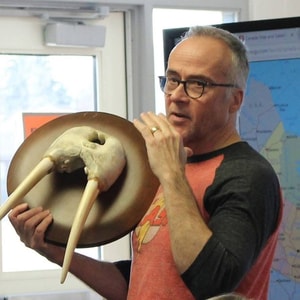
Polar Bear hunter, Brent Nakashook of Ikaluktutiak (Cambridge Bay), Nunavut, Canada, was raised by his grandparents on the land. Brent discusses the traditional way of life and the difficulties of juggling his work at a mine near Ikaluktutiak and his desire to stay connected with the land and his culture. This is a reupload from Arctic Canada - The Culture Cure.
Find out more at https://good-eh-canada.pinecast.co