Two Spirit, Too Strong - Bryson Syliboy tackles his detractors and life head on.
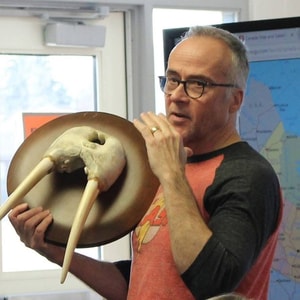
This is a reupload from Arctic Canada - The Culture Cure.
Transcript
Welcome to Arctic the Culture Cure the podcast, all about Canada's Arctic, the climate, the animals, the land, the people, the culture, and what it can teach the rest of the world. I'm your host, Rob Fagan. Bryson Sillaboy lives in eastern Canada and is extremely proud of his Mi' Kmaq heritage. With thousands of followers on Twitter, he tweets a Mi' Kmaq word of the day video. He also discusses current issues facing Indigenous peoples and opinions, some of which are controversial. Bryson identifies as two spirited and humorously refers to himself as Bryson the Gator in his Twitter handle. Bryson is thought provoking, humorous, and never boring. We're very pleased to have Bryson on our podcast today. Welcome, Bryson Quay.
Speaker B:Well, hello.
Speaker A:No, it's fantastic we could connect. I was been following your tweets in the last few days, and as we're recording this, it looks like you're preparing for Hurricane Dorian to hit where you are, where about are you located in the Maritimes, Bryson?
Speaker B:I live in Port Hawkesbury, which is on Cape Breton island in Nova Scotia.
Speaker A:Okay. Okay, fantastic. Now, a lot of the listeners of the podcast, they're very familiar with, you know, indigenous groups in Western Canada, Northwest Territories, Nunavut, but likely some of them not so familiar with the indigenous groups such as Mi' Kmaq in eastern Canada. And if you can maybe give us a little background, Bryson, you know,
Speaker B:when
Speaker A:you were born, was it in reserve land, city country? Where did you begin?
Speaker B:Well, I was born in actually in Halifax, so the city, but I grew up on a small reserve called Shibanakady. Okay, well, it's not really small. Like, it's the second largest reserve in Nova Scotia. Yeah, so I grew up there and lived there for almost all my life.
Speaker A:Okay, okay. Now, at what age did you become aware of your unique cultural heritage? Was that imparted on you by your family as you were growing up?
Speaker B:Yes and no. Like, well, my parents are both survivors of the residential school, so we weren't really allowed to partake in a lot of our culture. They wanted to give us like, you know, a chance to do better than what they did, you know, like growing up. But I do remember my grandparents teaching us like, Mi' Kmaq when we were like, really little, behind our parents back and stuff like that. Stuff like that, you know. You know, so. But like, you know, growing up on the reserve, like, you know, we always went to powwows and ceremonies and stuff, but, you know, like, we did, like, unfortunately, like, the Catholic church was a big part in. In my reserve as well. So we would take more into that than our traditional culture.
Speaker A:That's so interesting how things get turned around like that because of colonialism and that, you know, to put it, you know, quite frankly, that desire in colonialism to, you know, get the savage out of the man, so to speak.
Speaker B:Exactly.
Speaker A:And the unfortunate thing is, it did lead to. I don't know whether shame is the right word, but, you know, people like your parents who didn't want you to have the struggles they had, perhaps not immersing you as much in your culture as you may have desired as you got older.
Speaker B:Yeah, exactly. And, like. Well, for me, like, I'm kind of that generation where we're kind of forgotten about. So, like, you know, like, my parents were directly into the Residential Resources Residential school that didn't close until the mid-60s.
Speaker A:Yes.
Speaker B:In. In Shibanakhadi. And so, like, my generation, my sister's generation, we were all kind of like the new kind of generation that kind of got forgotten about, really.
Speaker A:Yeah.
Speaker B:So a different. Yeah, you're in both. Yeah. And I don't know. I. You know, I don't blame them for what they. They wanted us to do, but, you know, like, it's kind of like it's. I feel like I'm just, I guess, in between two worlds. You know what I mean?
Speaker A:Yeah. Yep.
Speaker B:Yeah.
Speaker A:No, that's very true. And I mean, again, your parents thought they're doing the right thing. You're right. You can't begrudge that. And it's so nice that your grandparents were available to impart culture on you and keep you going down that path. And I think it's so neat, the Mi' Kmaq word of the day that you do on Twitter. And what inspired you to get that going?
Speaker B:It was mainly for, like, just so, like, I can remember words, you know, like, I would use that word during the day or try to use the word during the day. So it kind of just started off like, you know, oh, I just do it here and there. You know, I would do it maybe once or twice a week. It was just tweeting the word, and then people were just like, okay, well, I want to know how to say it. So I would have to spell out phonetically.
Speaker A:Yes.
Speaker B:It kind of just snowballed from there, and. And then people were like, well, you should do videos. I'm like, well, I'm not really a video person. Like, so, you know, then I just took a chance and started doing videos, I think. When was it? Like, last March, I think.
Speaker A:Yeah. Yeah. You've been going For a while now, I was kind of watching that progression, and the video is a nice part of it because I've seen some people try similar things in the past, but you don't have the video. You don't have somebody seeing it. So that piece of it is really nice. It's great doing that. I think a lot of people appreciate, you know, having that contact and you giving people a better understanding of your language. That's much appreciated.
Speaker B:Yeah. And I find, like, I'm doing something different than, like, a lot of the other language. Tweeters, I guess. Tweeters? A word, I guess. You know, like, I try to engage my audience and learn from them, too. Like, I want to learn their language. And what. What if, like, if the word's similar or if it's, you know, completely different. Stuff like that. So, yeah.
Speaker A:Now you. You've been, you know, fairly outspoken on your. In your tweets about appropriation, racism through the use of an indigenous, you know, caricatures and caricatures and things like that, and, you know, examples, the Nova Scotia coat of arms. And there's one particular golf course that I've seen tweets, you know, their logo.
Speaker B:Yes.
Speaker A:Response been to that? Have those organizations responded back to your concerns and you. You voicing your. Your opinions about appropriation?
Speaker B:Yeah, Especially the golf. The golf course, which is located in Sydney. They. They have. They haven't reached out directly to me, but they. They said that they're going to continue using it because it honors, know, the local. Local tribe here, which, you know, obviously it doesn't. No, no. And especially since they're using Plains Indian headdress instead of a Mi' Kmaq headdress, which is completely different.
Speaker A:Right, right.
Speaker B:Yeah.
Speaker A:There's so many things wrong with that. I mean, it's. I would say, having looked at the tweets and the logo that they're using, I would say it's pretty much as blatant as the Washington Redskins. Really?
Speaker B:Yeah, exactly.
Speaker A:And you can't get much more blatant than that.
Speaker B:Nope, that's true.
Speaker A:You know, in just thinking of that, would you consider yourself an activist?
Speaker B:Yeah, I would. I, you know, like, I don't get out much in the field of activism, but, like, you know, I guess I do a lot of social media activism.
Speaker A:Yes.
Speaker B:And, you know, that's just as important,
Speaker A:I believe it's such a huge part of our lives now.
Speaker B:Yeah. And especially, like, for me, like, I live in a rural area, so it's hard for me to go out and be an Activist in Port Hawkesbury, if I'm the only person there. Right.
Speaker A:Yeah.
Speaker B:And such.
Speaker A:Yeah. No, it's a great way to connect. And that's one trend that I see that is think fantastic is the number of young activists, indigenous activists. It seems it's growing in Canada, and I think it's overdue. And, you know, you're a part of that, which is fantastic.
Speaker B:Yeah. And I just. I just hope that, you know, like, I convey my message as truth, truthfully as possible, you know, and I strive to learn every day, you know, Like, I know I don't have all the answers, and I know that, you know, we all don't have the answers, but if we put our minds together, we do, you know? Yes.
Speaker A:No, that's. That's very true. Now, you. You mentioned your. Your parents and residential school, and it's different for everyone, depending on their experience. But what does truth and reconciliation mean to you?
Speaker B:Truth and reconciliation? To me, that would mean, you know, just honoring the past. Like, you know, like, our past is good and bad. No. And we gotta. We gotta navigate that, you know, like, have it. Have it taught to young kids, you know, so that we can learn from the past so we don't make those mistakes again. That's what truth and reconciliation means to me, I think.
Speaker A:Yeah. So it's kind of that collective experience, in a way. It's what your parents experienced, what you're experiencing, and kind of blending them together. So there's that learning.
Speaker B:Yes.
Speaker A:Forward. Yeah, yeah, yeah.
Speaker B:You know, I was gonna say, you know, like, we had the Truth and Reconciliation Commission come here to Halifax in 2020 12, and, you know, like, I knew what happened, but, like, my parents wouldn't talk about it that much. My aunts and uncles wouldn't talk about it that much. So, like, it kind of, like, opened my eyes when I heard them speaking about what happened to them, you know, so, like, it just, you know, brings it into perspective.
Speaker A:That's a really good point, Bryson. I mean, some parents, some grandparents haven't spoken about it up until recent years because it was so painful. And it's hard to bury your soul with those type of memories. And so I think folks like yourself lost out until they heard that and identify with the actual experience, the people. Otherwise, it's just a story. Unless you can relate it to real people.
Speaker B:Yeah, exactly.
Speaker A:Yeah. Jumping. Switching gears just a little bit, Bryson, you identify as two spirited. At what age did you realize that you were two spirited? At what age did that become a reality for you where you saw that?
Speaker B:Well, I guess being two spirit, I didn't realize until later in life, you know, in my 20s. Yeah. I always knew that I was gay, like, you know, from a young age.
Speaker A:Yes.
Speaker B:But, you know, like, as a two spirit person, as an indigenous person, you know, I did not know what that meant until I started learning from other. Other cultures. Other indigenous cultures. Because, you know, the Mi', Kmaq, we've been, I guess, dealing with colonization since, you know, the 1600s. So we don't have our two spirit knowledge anymore, you know, so it's been wiped out by colonization, by, you know, everything. So, you know, like, we're as Mi' Kmaq people, we're trying to reconnect with that. So we just started doing that, you know, 20 years ago now.
Speaker A:I think a lot of people who maybe aren't indigenous, maybe even some that are indigenous, that term spirited has only started to become used more frequently in, say, the last five, ten years. If you wanted to say to someone, here's what two spiritedness means to me and means to me as an indigenous person, what would you say?
Speaker B:Oh, that's. That's a tough question because you, to be honest, like, it's. It's specific. Right. So being two spirit, I guess it just means that you're connected more to any gender. You know what I mean? And you're, I guess. How do you. How can you put it to be, you know, it's just. It's so hard to explain. Yes. It's a. It's a specific, like, cultural rule role, you know?
Speaker A:Yes.
Speaker B:Her, like, tribe.
Speaker A:Yes.
Speaker B:Yeah.
Speaker A:And now.
Speaker B:Yeah. So some were, you know, like healers, some were advisors, you know, you know, some were. Yeah.
Speaker A:Okay.
Speaker B:It just depends, right?
Speaker A:No, that's a very good way to add into that. Now, as an indigenous male, and then coming out and then identifying as two spirited, what was your experience of acceptance from the indigenous community as maybe compared to the non indigenous community? Was there any difference?
Speaker B:Not really. Well, growing up in a rural area, it's hard to be, you know, be out, you know, so. Yeah. And on top of that, you know, coming from a reserve that's steeped in, you know, the Catholic faith.
Speaker A:Yes.
Speaker B:It's even worse, you know, so I never really came out to my family until probably like a couple years ago.
Speaker A:Okay.
Speaker B:Yeah. But, like, I never hid who I was. You know what I mean?
Speaker A:Yeah.
Speaker B:Yeah.
Speaker A:And how did that. Has your family been accepting. Did it take them a while to accept that or was it kind of they knew and things were fine?
Speaker B:It took. Yeah, it took A while for my family to accept it, but, you know, now, you know, they're great with it. You know, they love my partner. Me and him go down to the reserve all the time, you know, and they, and he has a great relationship with my father and my mother, unfortunately passed away.
Speaker A:Oh, I'm sorry.
Speaker B:Nine years ago now. So.
Speaker A:Okay, that's so good to see. Because you mentioned the Catholic Church and colonization, and I find it so ironic that pre colonization, the two spirited were almost revered. As you say, they had different roles depending on the different tribes. They had a different role, but they were not seen as anything less than anyone else. If anything, they were seen as something more special.
Speaker B:Yeah.
Speaker A:And I find it so ironic that in some indigenous communities, that whole dark, you know, period of colonization and Catholicism and religion being that some indigenous folks nowadays relate more to that than their heritage. And I just find that very sad that, you know, that piece was lost for so long because of colonization.
Speaker B:Yeah, it is. It is sad because I, I still see it on my reserve, you know, like, it's so, so bad. Like, I know I remember about, I guess about nine years ago, my cousin, she tried to marry her. Her girlfriend on our reserve and she wasn't allowed to.
Speaker A:Oh, really?
Speaker B:In, in our church, you know. Yeah. You know, it's just, it's sad to see that it's so wrapped up in it and that, you know, like, it's especially for east coast indigenous people because we've been like. Not to say, not to say anything bad, but like we've been colonized a long time.
Speaker A:Yes.
Speaker B:And it's just, it's just so ingrained into our culture now. And I don't, I don't know what, how we can get away from it. Or if we are to get away from it. No. Or how we, how can we live with it. That's the question. Right.
Speaker A:Well, again, and I think we touched on this earlier, I mean, once you tell someone that things that their culture is bad and you do that from an early age, really difficult to change that mindset that people have. It's, you know, like the Inuit up north being taught that goat singing was evil and the tattoos, you know, face tattoos were evil. And now that's coming back and people are. It's so hard for them, some, so hard for some to accept that there's nothing wrong with that. That's culture.
Speaker B:Yeah.
Speaker A:And I think that's going to be a battle that's going to take activists, you know, like yourself, for some years to come. But I think it is moving forward. Maybe not as fast as we'd like,
Speaker B:but hopefully, you know, it definitely is. Like, you know, I see it with my nieces and nephews. They're fully ingrained in the culture. They're learning the language, they're learning traditional songs, they're learning traditional dancing, and it's great to see that. I'm just glad that they get the chance to do it and that our culture will survive.
Speaker A:Very positive. I mean this in the most positive fashion possible. To me, you're one of the bravest people on social media, you know, because, you know, not only are you indigenous, which can draw, I think the term is trolls. You talk about your culture, so you get the trolls, you get some hate out there, but you're also a young, two spirited male, which again, tends to, on social media, you know, draw hate and trolls. And I really respect the fact that you keep moving ahead and you keep tweeting and you keep in social media and you keep that presence. What does keep you going and make you so resilient and able to face that, you know, full of humor and deal with those folks when they do, you know, slither their way into social media?
Speaker B:Oh, I would say, I guess the community that I made on there, you know, I have a lot of great contacts on Twitter, on social media, you know, like, and, and I know when to step back and let, say, the allies, you know, take care of the trolls. No, or I know when I have to deal with the men, you know, bothering the women and stuff like that, you know, like. So I guess it's the community that I built on there that, you know, that surrounds me, that keeps me going.
Speaker A:That's fantastic. That was one of the things I wanted to touch on is what type of support you were getting, you know, on social media. It sounds like it's pretty strong, people rallying, so to speak, when those trolls do surface. Have any indigenous leaders or activists reached out to you as well in support?
Speaker B:Not really. You know, like I, I guess I do know, like a lot of them on there, but like, not like, well, but, you know, I guess I don't know, I don't know if I run in the same circles as some of the, you know, the leaders or the political figures, you know.
Speaker A:Yeah, yeah, yeah. I think again, as the number of activists grow, it'll become more of a community and I think people will start to crisscross and share information and gain strength from that. So I think that'll. It's building and I think it'll build more as A young. I consider you young. Any advice you'd have for young people, whether they're indigenous, whether algae, BQ or other, what would your advice be to young people that, you know, are dealing with some of these issues and moving forward in today's society?
Speaker B:Not. Don't be afraid to ask for help. That's, that's the key advice I give because, you know, like, you're, you're, you're gonna need help, you know, like, and it doesn't matter if it's, you know, your best friend giving you your help or if it's a therapist or if it's a doctor, anybody, you know, like, somebody can give you help and, you know, don't be afraid to ask for it, you know, and. Because, because sometimes we just need a shoulder. Yes, yes.
Speaker A:You know, yeah, no, that's very, very sound advice. And, you know, this may be a little bit of a difficult question too, but, you know, if you could go back and give advice to a young Bryson, and what would that advice be? What would you, you know, looking back on some of the things you've been through, is there any particular advice you give yourself looking back at where you've been and what you've gone through?
Speaker B:Oh, I actually feel like I just answered this on Twitter in June. Okay, what did I say to myself? No, like, literally, I tweeted a picture of my, of my graduation picture. You know, I just went to my 20 year high school union and I remember saying, you know, like, don't be afraid to make mistakes. I think that was one of the things I said, you know, you're going to make mistakes. They're gonna be good or they're gonna be bad, you know? Yes. The key to that is learning from them.
Speaker A:Right?
Speaker B:Yeah. You know, and what you're, what, what I went through as a youth, you know, that made whatever, whatever happened made me stronger as a person today. Yeah. And it's all gonna be worth it.
Speaker A:No, thank you very much for that. That's excellent advice, whether for yourself, if you could look back in time, or for a young person today as well. So I really appreciate you being on the podcast today, Bryson, and I find your tweets inspiring and your presence on social media and media inspiring. And I would encourage any of our listeners to look at your Bryson the Gativ on Twitter and subscribe to that account, and you'll see some really neat stuff and some really neat tweets and inspirational tweets, and I'd like to thank you for that.
Speaker B:Thank you very much for having me today. I really enjoyed it.
Speaker A:Well, thank you very much, Bryson. You take care.
Speaker B:You as well.
Speaker A:Thank you for listening to this episode of Arctic the Culture Cure. For more information about my novels or to inquire about my presentations, please Visit my website, www.robertfagan.com. we'll join you again on the next episode of Arctic the Culture Cure.
Bryson Syliboy is Mi'kmaw and Two Spirited. An outspoken advocate for both the Indigenous and LGBTQ communities on social media, he humerously refers to himself as "Bryson The Gaytive", and despite facing his fair share of detractors and haters, remains undetered. In this episode we discuss the challenges of being Two Spirited, the negative effects of residential school on culture, revitalization of the Mi'kmaw language, cultural appropriation, the use of racist symbols and more. Bryson's current Twitter handle is @ArnallLabrador. This is a reupload from Arctic Canada - The Culture Cure.
Find out more at https://good-eh-canada.pinecast.co