Cultural Identity - A Story of Rediscovery and Success - Part 2
This is a reupload from Arctic Canada - The Culture Cure.
Transcript
Welcome to Arctic Canada. The culture Cure, the podcast all about Canada's Arctic, the climate, the land, the people, the culture, and what it can teach the rest of the world. I'm your host, Rob Fagan. Today we have part two of our interview with Kylik Kasoon Taylor, the owner operator of Tundra North Tours, a tourism company based out of Inuvik, Northwest Territories, Canada, offering unique Arctic experiences such as spending a night in an igloo village, wrangling reindeer, and visiting Tuktoyuktuk on the Beaufort Sea, where you can experience a pingo firsthand. Kylek recently won the 2019 National Aboriginal Youth Entrepreneur Award from the Canadian Council for Aboriginal Business, and we were lucky enough to have Kylek for an interview.
Speaker B:I started feeling like, well, how can I share this? Right? Because there was a lot of, you know, in Uvala, kids that I went to school with that weren't getting this experience. And I felt like that was just kind of heartbreaking. You know, you take these kids. I would take people out hunting caribou with me that had never gone caribou hunting and never gone duck hunting, and they've lived here their whole life. And I thought that was really sad in a way, because it's part of who they are. And when you see them out in their element, you know, they're totally different people. They may be the kids in the streets, you know, walking around, making trouble, but when they're out on the land, you know, they're so excited to be out there, and it's such a powerful experience for them, but they don't have. They don't have access to it. My grandfather said this really brilliant thing, and he said the kids have. They have the land on their mind, but they don't know how to get there. And so that was kind of a powerful thing that I heard him say. So I wanted to try to create something that would be able to, you know, bridge that gap a little bit, because I feel like it's important. If it was important to me, odds are it it's gonna be important to a few other people, maybe lots of other people. Yeah.
Speaker A:So now you have Tundra North Tours, and you. You've been. How many years have you been operating now, Kylie?
Speaker B:12.
Speaker A:12 years. And you have local people that work with you in the company?
Speaker B:Yeah, we're completely. Actually, we're. We're a hundred right now. We're 100% Indie Valley and Gwich' in staffed. So.
Speaker A:Fantastic.
Speaker B:Pretty proud of that. That's really. It's a very tough thing to do.
Speaker A:Yes. Yeah. That's amazing. So the. The tour company, your. Your overall, I guess, mantra or theme is, I mean, you're engaging local people in the company and operating the company, and not only, I guess, teaching tourists, as you'd call them, about the Arctic, but also getting local people engaged. Re engaged in culture as well.
Speaker B:Yeah, I mean, I've done a lot of thinking of this, you know, since I started my company, because I really did it kind of on a. Like, I didn't have the education or the mentorship or there wasn't really a blueprint to follow. And so because of that, you kind of learn as you go and develop your own ideas and philosophies, and then if they start to work and be successful, then hopefully other people can adopt those, and it would make their life a little easier. As you, you know, like, I've been told I'm blazing a trail or whatever you want to call it, and that's great. But there was many people before me that opened up all the doors that are available to me now, so. And I'm very thankful for that. Basically what's happening is I've come around at the right time. That's it. You know, this is the right time with reconciliation and the importance of culture. And the travel industry is responding very well to, you know, cultural transformational experiences.
Speaker A:So I think you're being a little humble as well. I mean, just talking to you, I can tell your spirit and you're wanting to reconnect with your culture is a massive part of it. People sense that. It's not just. I think it's just timing. Timing is important.
Speaker B:But, yeah, I think it's important that things are authentic. You know, you can usually tell someone is just pretending to be passionate about something, and then people feed off that, especially our guests. But one of the things that I wanted to touch on about, you know, with the company and how we've developed and changed over the years is the one thing that I kind of realized about four or five years ago was that cultures develop around resources. So, you know, in Ivawa people, they're the whale, seal, caribou, fish, Arctic coastline above the tree line. You know, like, our culture developed around these resources and accessing those resources and being in that environment, and then all of a sudden, you're removed from that. You're removed from that environment. You're removed from that sense of, like, getting your own food and being self sustainable and, you know, building your own house and all those different things and aspects of day to day. Life that an Inuit person would live on, a day to day life that develop their culture. And so as I was realizing that, I thought to myself, well, tourism is in my opinion the best way because you can reconnect the culture to resources. So now our staff is able to go out and, you know, set fish nets and build igloos and go to the whale camp and build ice houses and do all these cultural aspects. But at the end of the day, they can go home with a paycheck to pay bills because they need to. And they also can go home with fish and dry meat and other things that we're developing out there. And I really feel like until we find a way to sort of connect these resources, right now what I'm seeing is a lot of like, you know, subsidized cultural experiences where kids get on the land. But if you can only go on the land for that one experience for a week, it's not gonna stick, you know, and these culturally based jobs that can sort of provide an avenue for living in both worlds. So, you know, I think some of our success is the fact that myself and our team understand that we need to live in both worlds. We need to have the cultural understanding and skills on the land, but we also need to be able to, you know, send emails and market our product effectively and communicate with other people. And so that's, you know, something that we're working very hard on with our company is to try to create an avenue where people can reconnect their resources. So the food security thing is one like, you know, we're trying to get like a fisheries going, you know, so people can go out there and be fishing, catching fish traditionally, but making a living at it. There's all kinds of other aspects, picking roots and going out for healing, medicines. And you're seeing it happen all over Canada and the north is starting to catch up to that, is to make those aspects a type of industry. So that because, you know, not everyone can take weeks and weeks off and then afford a boat and afford a snowmobile to go out on the land, it's not possible for most people. You know, I live in Inuvik, I live on the west side there that I guess you'd call it like the ghetto. And you're not seeing people out on the land. You know, they, they don't have access to it. And so it's, you know, if you could create a job. And so almost all of our staff that we have are really quite happy to be able to have a job like that and build these igloos and do all these cultural things. And as our company grows, we're able to, you know, hire more people and pay better wages and create a better quality of life. And I have really great team that buys into the vision, you know, and works extra hard to make it a reality.
Speaker A:That connection between the old and the new is so critical for people to have wellness, you know, overall wellness and peace of mind. Because when I lived up in the Arctic, I saw that so many times. There was that disconnect. There was that butting of heads between the old and the new. And like you say, if we can pull those together, that's just huge.
Speaker B:That's really the key. Like, you know, not forgetting where you came from, but not neglecting the fact that we're moving forward. And, you know, like, I think of living out on the land now, you know, with today's technology, I can go and live on the land, but I could turn a tap and there could be water. I could turn the light switch on and my battery bank kicks on. And there's ways for us to do it so that it's still, you know, part of your culture and you're out on the land, but it's. It's. It's comfortable. You know, you can. You can. You can do that now. And that wasn't always possible. And I just. I just feel like it's important to share your culture. And, you know, there's a market out there of people that are interested to learn about your culture and experience something that's authentic. And, you know, there's. There's lots of guys out there that have the skills. They're sport hunters, they're trappers, they're bush people. But they really struggle, you know, and if there's a way to find. Not all of them struggle, some of them are successful, but some of them. They really struggle to make ends meet, you know, and if they could have an aspect where it was. If you're going trapping anyways and maybe you bring somebody along with you, you could really have a successful business here. And you could mix those old worlds and new worlds. And we're trying to create an avenue for people that. So that they don't necessarily have to have those skills and the business number and, you know, file, like all. It's really hard. Like, it's not an easy thing to do, and it's not necessarily something that you should do if you're just a trapper. But we're trying to create an avenue where people can be Part of that, so that we can provide our customers with authentic experiences and then you can live the quality of life that you want to live. And I think mixing those is kind of the way to go forward. And, you know, we've gotten some buy in from people and the industry has responded well to it. And, you know, so we're keep marching forward.
Speaker A:Yeah. Looking at that side of it, Kylie, what are. If you could just kind of explain what those experiences are. What do you offer? What are some of the things your winter, summer that you offer to customers when they head up to the Arctic?
Speaker B:Yeah. So we specialize in immersive, authentic cultural experiences. So we want to make sure that our guests learn about who we are, you know, our history, our struggles, the beautiful culture that it is and how we survived here and our connection to the land and what are our resources. And we want to make sure that they can see the Arctic in all of its beauty. You know, the Arctic Ocean, the Mackenzie river, the mountains, all of that. But we want to make sure that they see it through our eyes so that they're not just seeing, like, there's plenty of places you can go and see a beautiful mountain range. But if you come here and you see the mountain range, we can tell you what it means to us and how the caribou migrate through there and how we harvest the caribou and how our people been doing it for thousands of years. So then it's able to connect. If we're connected to that mountain, if we do our jobs properly, then these people will feel connected to the mountain and in turn feel more connected to their environment and then hopefully make better choices with where they spend their money and how they vote and what they stand up for and what their beliefs are. And that's something that's really important to me. And for us, our company is not just about providing tours to our clients. It's also about providing an avenue for our staff to experience that. So, like, we just had a group up and we have a great big igloo built that fits 12 people. We have our staff in the middle there. Noel Bear is there and he's doing the Arctic sports games and I'm showing them Bach like, you know, and I'm sitting there thinking, like, man, this is super fun. And if I, if this wasn't part of my business, I would have probably never experienced this. You know, being in this igloo and sharing with people and playing our games. And so, you know, if you can, if you can find that balance, it's a really beautiful thing. And hopefully we'll be able to do that successfully enough that we'll be able to share that kind of blueprint with other people that want to make that possible in their communities and for their cultures.
Speaker A:What's next? So, you know, you've got the company going, you're involving, you're teaching people from many different angles, whether it's allowing people to be engaged in their culture who are local, or bringing in tourists from the south. Where do you go next with your company?
Speaker B:The big thing that we have next is a cultural lodge that we've been working on. We just finished phase two and now we're basically looking for, basically looking for the funding and the money to make it happen. The culture lodge will basically include all the activities that we're already doing now at a much better quality, but also be able to provide accommodations to our staff and our clients and to be able to open up more doors for us. So currently we're not able to do like tanning workshops or art workshops or, you know, like, there's certain things that we can't open up with. And so the cultural lodge will open that up and we plan to use that lodge as a capacity builder so that we could bring in other people from all over Canada that are interested in tourism and they can basically have a paid internship where they can learn about marketing and get their first aid and get some experience guiding and some business background and they can take those skills and that new confidence and they could take that back to their communities and implement it into something, a business there and also have the support from us to be able to, you know, do marketing with them and help them be successful. Because it's a very tough business. The north. And a lot of the approaches I'm seeing aren't successful because of the challenges that you have. You're very far from the market, your price points very high. The quality of experience isn't necessarily the experience itself is amazing, but the quality of, you know, the infrastructure, like, like people sleeping, you know, like indigenous people are extremely tough and they just like, ah, put them on the snowmobile and bundle them up and say, well, you know, these people have to be willing to pay for it. It's not, you know, we go out there as a need they want and so you have to be able to fix that. And so that part of that lodge will be for that. And then we'll have an aspect for that where culture will happen. So we'll be tanning local hides and creating local art, but also being able to have a market for that local tan and art. So the customers that are staying there will be the ones that will want to be buying, buying those aspects. And so we also are going to be putting in a greenhouse and a facility where we'll be able to bring in people from the community to pick roots and berries and all of those different things and to create. Right now there's some Inuit people creating soap out of bluega, beluga, muktak and like all these amazing things, we want to be able to provide an infrastructure to be able to make those things happen, but also open up a market for them. And so, you know, making. Making soap is great, but if you don't sell it or the local market in your community won't buy it for, you know, what it's worth, then we'll be able to help with all those different things. So we're basically trying to create a business that, you know, is financially sound and creates benefit for its community, but also takes a portion of that profits to put into bringing out kids and bringing out youth and creating jobs and creating an aspect of where community members can come out and use the facility to harvest and do things that they want to do without having to need to, you know, afford a boat and all of these different things. And so we'll be able to open it up to community members so that they can experience it and go out and practice their tradition. But also that enhances our product. Right. So it's hand in hand. Like, you know, if you go to the. If you go to the igloo village and it's just you there, you know, from down south, and you're sleeping in the igloo, it's not very much fun as opposed to going to a thriving community that has, you know, so for me, it's kind of the mixture of both. And, you know, the feasibility study has gone very, very well, and the market has responded really positively to it. And, yeah, we're marching forward with that. We have a lot of hurdles to go through when it comes to local politics and things that are getting in the way of progress and something that is, you know, going to be very, very, very productive and positive for the community. So, yeah, that's the next big plan, and it's super exciting. It's getting more and more real every day, and we'll keep marching with that one.
Speaker A:Well, you're getting me excited. I haven't back to Inuvik for a number of years now, and I've been talking to people about heading up there this summer. All these things that you're doing currently and you're talking about getting going. It makes me want to get back up there and just experience some of that, some new things and some things I've already experienced. Just fantastic.
Speaker B:Yeah.
Speaker A:If folks want to get a hold of you, Kylek, to have one of your experiences, how do they do that? How do they get a hold of you?
Speaker B:The best way is to check out the website. It's tundranorthtours.com There are all of our contact information is there and it has a breakdown of all of our different products. It has some videos that we produce that have to do with our company. We won a cans awards for one of our videos that we put together and it talks a lot about some of the things we talked about, why we do what we do and got some really great visuals of what we do. The reindeer herd, the igloos, all of that stuff. And that's a really great way to start. We're also on all the social medias, Twitter's, Instagram, Facebook, we're on all of that. And we try to be as active as possible, but a lot of times we're just, you know, busy building stuff. But they're pretty cool. You know, we're starting to get better at posting on that and they're fun and we get some interaction with some clients on that and that's. That's pretty much the best way.
Speaker A:Tundra north tours.com Yes.
Speaker B:Yeah.
Speaker A:Okay. Fantastic. Any. If you had to give some advice to a young person up in the Arctic who wants to follow in your footsteps, so to speak, to get their own company, what would be advice to someone who's just looking at that and wants to get going and reconnect with the culture and do that as part of their ongoing life?
Speaker B:To find a mentor. To find a mentorship. If I had that when I first started, I think I would be where I am today in the first three years. You know, if I had somebody that had experience and in actual tourism or whatever you want to do carpentry, I don't care what it is. But when you first start, you really think you know stuff, you don't know anything. And to find some mentorship, there's. There's some programs out there in the Northwest Territories and other places that will help fund these mentorships. I used to be part of a program called Keso and then also to find all the information you possibly can because there's a lot of support out there. Lots of financial support, lots of other types of support. And if you can plan. I'm a big fan of planning for a long time and then failing really quick if it doesn't work, as opposed to, like, failing for years and years and years. Like, if I had spent more time instead of starting my business, like, bang. If I had spent a year or two just mapping out what I want that business to be, be where I want it to go, what do I want to provide? What are the types of resources I can access for help to make this happen? I would have been so much better off than just seeing an opportunity and grabbing it. Odds are, in the. In your Arctic, you know, those opportunities will be around in a year. You know, like, there's not a lot of people swooping in to take them. So, you know, I'm a big fan of planning and getting the support and, you know, there's. There's things where you can get. You can go on ei. So you're not pulling money from your business, which. Which I've had to do, you know, which is. Makes it very difficult. And so, you know, that's what I would do. And. But also to make sure that you. You have some support around you. So when you're having bad days or things are tough that you. You have somebody that says that can really, like, I have my mom who does this for me, and she says, you know, like, you're doing great. You know, keep pushing forward. Things are gonna. You know, someone that can help lift you up when you get down a bit, because we all do. It's a very tough business in the Arctic is. I think it's the toughest place in the world to do business. And, yeah, that's. Those are some of the things. And reach out, Reach out. There's. I think anyone who's done anything and has had found success is really happy to help other people find it. I find in the army, you know, and to not think of your neighbor as competition, but as allies, that's. That's a big one, too. I get that all the time. We're all in this together, and we could all be successful, and as long as we work together.
Speaker A:Great. Thank you so much, Kylek. Really appreciate your time today and learning more about you and about Tundra North Tours. So, you know, I love to chat with you again. And thanks so much for spending out at the camp.
Speaker B:We could do one at the camp.
Speaker A:That'd be amazing. All right. Thank you very much. Congratulations on your success and your future success.
Speaker B:All right.
Speaker A:Okay. Thank you. Thank you very much, everybody. We've been speaking with Kyla Kassoon Taylor of Tundra North Tours.
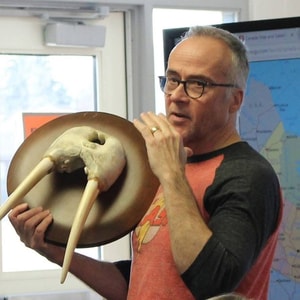
Kylik Kisoun Taylor is the owner/operator of Tundra North Tours, a tourism company based out of Inuvik, Northwest Territories, Canada, inside the Arctic Circle. Although of Gwich'in and Inuvialuit decent, Kylk was raised in the Southern regions of Canada. At sixteen years of age he returned North to meet his birth mother and family. The experience of rediscovering his culture was profound! In this episode, Kylik continues to discuss the importance of culture and the land, to people of the Mackenzie Delta and the Arctic. He outlines the goals of his company, to strengthen, and keep the connection strong between the indigenous peoples of the Delta and their customs, as well as to educate visitors from the South through the interactive experiences his tour company offers. He also shares the importance of embracing new ideas such as technology, without losing the connection to the land and cultural identity.
This is a reupload from Arctic Canada - The Culture Cure.