Nyla Innuksuk - Focusing on Inuit culture through virtual reality, the Marvel Universe and film making - Part 1
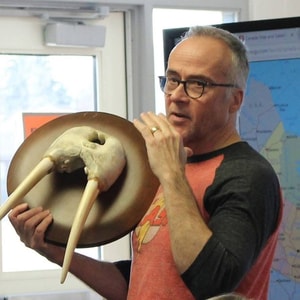
This is a reupload from Arctic Canada - The Culture Cure.
Transcript
Welcome to Arctic the Culture Cure, the podcast all about Canada's Arctic, the climate, the land, the people and the culture. I'm your host, Rob Fagan. Naila Anukshuk is a film director, writer, producer of film and virtual reality content. She is a Ryerson Film graduate and CEO of Mixtape VR. The short horror film that Naila produced, Kayut Ayuk was chosen as a Toronto International film festival top 10 short. Naila was also named as the inaugural Imaginative Indigenous Vrar artist in residence. Naila is Inuit and originally from Igloolik, Nunavut in Canada's Arctic. After moving to the capital of Nunavut, Aqaluit at the age of three, she moved to Kingston, Ontario, Canada when she was eight years old. Amongst other projects, Nyla recently collaborated with Jim Zub to help develop the first Inuit superhero, Snowguard, the newest member of the Marvel hoop superhero team, the Champions. Nyla also co wrote the Champions Annual with Jim Zub, which came out in December of 2018 and focused on Snowguard. We're excited and privileged to have Nyla joining us from Vancouver today. Welcome, Nyla.
Speaker B:Hey there.
Speaker A:Hi. I'm gonna throw a bit of a. I'm gonna put you on the spot with a kind of a funny question right off the bat. I mean, we are gonna be talking about superheroes later in the podcast and based on the many achievements you have already in your life, you are a superhero. If you had to pinpoint your one superpower that's led you to the success you've achieved, what would that be?
Speaker B:Oh, wow. I don't know. I think that, I think there's like a couple things, mainly being that I think I'm relatively easy to get along with. I know that that sounds like, kind of obvious, but I mean, when I'm working with, I work in film and virtual reality and augmented reality and all of those are things that, yes, can be kind of led by a director. But, you know, it takes a full team to kind of make things, these things happen. And especially when, you know, you're working with these, you know, some of these are kind of these grassroots driven projects. You really kind of need to be having a great team with you and, you know, being able to just be kind of easy to get along with, easy to work with. And I'm also just, you know, really passionate about the projects that I'm. That I'm working on. So it kind of makes it easy for me to kind of get other people excited and. Yeah. And I, you know, when, for me, when I'm not sure of something or if I don't feel as if I'm necessarily qualified, I'm really good at asking for help. And that's, you know, that's really important. I've got a lot of friends that, you know, that our relationship started as them being mentors to me. And it's. And these are people that I continue to work with and are colleagues of mine now. But I really just kind of started asking for help. But, you know, whether it's with movies or, or. In virtual reality, which is like, you know, cutting edge technology that a lot of people aren't experts in yet. And so you kind of have to rely on your own innovation, but also kind of people around you to kind of be, you know, developing new technologies or things that you can apply to your own work.
Speaker A:Those are three fantastic skills to have. I mean, you know, I've been in different business for a long time and if somebody has those three skills, the people skills and the passion and being able to ask for help and be willing to ask for help, that's, you know, fantastic, super skills to have. Now, Naila, you were born in Igloolik and moved to Ocala, what, you were quite young, and then on to Kingston, Ontario when you were 8. At that age, did you have a good sense culturally of who you were or did that come later in life?
Speaker B:Yeah, you know, I mean, I think, I think I did get a sense of who I was a bit. Obviously. I think that for Indigenous people and Indigenous people growing up in, for Inuit in this, what we call the south, which is anywhere south of the north, south of, you know, the Arctic, but even for first nations people, Metis people living outside of reserves, you know, I've certainly dealt with my own issues of identity. But, you know, it was interesting because when I really started to learn more about my indigeneity, start to involve it in my work, it was in Toronto. And there's not a lot of Inuit living in Toronto. And it's the community that I kind of found myself working with, but also just finding, discovering my indigeneity through with alongside were first nations people in Toronto. And when I graduated from Ryerson a couple weeks after graduation, I started working at a production company called Big Soul Productions, which was owned and operated by Laura Milliken, who's Indigenous herself. And everybody that worked there for the most part was Indigenous. And so I learned about like, I didn't know what smudging was and they were, you know, because that's not something that is part of Inuit Culture, but kind of got to know what that was. And, you know, as an associate producer for Big Soul, I kind of traveled around the country meeting indigenous leaders, specifically, like, mostly first nations and Metis, but also, you know, working with Inuit. And that was kind of a really interesting learning process for me, you know, kind of being able to look to my first nations friends and colleagues and how they use their indigeneity in their work or even just to kind of think about themselves. And I think it's, you know, even today, that kind that exists, but it's kind of also extended, like, at least for myself, working in Toronto with, you know, with women of color, with black women who are kind of defining these language about, you know, know, their place in the arts and in society. And, you know, it's been really kind of interesting to kind of see the similarities. And also, you know, with. I work a lot with indigenous futurisms, which has its roots in Afrofuturisms. So it's. Yeah, I think for me, you know, I've been through my. Through my work in the last 10 years, been doing a lot of work in the Arctic and kind of, you know, understanding what my indigeneity means to me. But it's kind of been, you know, alongside these other, you know, these other amazing folks that are doing. Doing the same thing in kind of parallel.
Speaker A:So you've been in a process, basically, where you can kind of mentor each other around those things. Was there ever a point where, you know, when you were younger and maybe growing up in Kingston, was there ever a point where you either had no interest in your. Your cultural background or, you know, sometimes people are made to feel ashamed almost of their cultural background. Did you ever go through something like that as you're growing up?
Speaker B:Yeah, absolutely. I mean, when I was in Kingston and I, we actually moved to a town called Sydenham, which is about 20 minutes outside of Kingston. It's a farming town, and there really weren't any people of color. And with. And my brother and I, who, you know, were. My mother's white and my stepfather's white. And it was. There was a point where, you know, my mom's last name is Hamilton, and both my older brother and I really kind of were wanting to change our last name. And it's this. You know, at the time, I wouldn't have said, oh, it's because I'm ashamed of being Inuk. But absolutely, you know, this kind of wanting to fit in and, you know, being able to say your name and having people be able to understand it. And you know, but it really wasn't until I was probably in high school that you know, that, you know, because as kids we don't really talk about race in the same kind of way. And then. But, you know, it was. Yeah, I was definitely found ways of coping and that. And that was, you know, trying my best to fit in and in that process, probably kind of pushing down some of my interest in my in oak background.
Speaker A:Was there one particular point in time you can point to change that where you, you kind of went. I want to embrace this. I'm proud of this. And this is. I have such a rich cultural background. I want this to be a big part of me.
Speaker B:Yeah, well, I still had been, you know, when I was in grade school and in high school, I was still in touch with my friends in Nunavut. And I was aware that, you know, when, when we're in the south, people talk about the Arctic and indigenous communities in different ways than obviously when you're living there and when it's a, it's a part of your environment. So I started to see, you know, lots of people talking about the north and the statistics around the north. And for me those just didn't seem to line up with what I was familiar with. And at least when you kind of think about, you know, the. Because there are a lot of social problems, of course, that exist in the north as a result of, you know, trauma and, you know, who else, you know, who, you know, many other things. But it's. So, you know, I was very interested in trying to capture my friends stories and share them in some way. So I kind of, I was always interested in film. And then of course, I think like as an indigenous person perhaps kind of also felt a strong connection to documentary because of its, you know, tendency toward lean towards kind of social issues. But. And then I got access to a camera when I was in high school, really. It was my brother's video camera that I would borrow and I started going back up to Nunavut and would film my friends, really just interview them about their life and kind of just film them. And I've still got like a stack of these like mini DVs at my house that I haven't really done anything with. But yeah, it was kind of like connecting just with my friends up in the, in the North. And I used film as a way to kind of make sense of it, I guess even
Speaker A:so that kind of, in a sense that kind of kicked you off on your path into filmmaking, that desire to connect.
Speaker B:Yeah, yeah, absolutely.
Speaker A:Oh, fantastic. Now, one thing that I've noticed, and, you know, I don't know whether you'll agree with this, but it seems to me that over the last number of years, there's been a bit of a. What would you call it, a renaissance or a more vocal embracing of the indigenous heritage of peoples in the North. We're seeing, you know, young women getting face tattoos. Again, we're seeing, you know, people speaking their language more and more. Would you agree with that? And would you see that as. What would you attribute it to? It seems like there's just this. And maybe it's due to people that I would. Activist, to me, is a good word. It's, you know, some people say, oh, an activist. But I think activists. I would include you in that. Activists who are promoting the culture. Is that. Would you say that's valid?
Speaker B:I think that. Yeah, I think it's valid that having that. Well, I mean, my. I think the fact is that it's pretty clear that my father went to residential school and I didn't. And so I think that's a big. A big difference. And the residential school system existed for a very long time in the Arctic. And with that came shame in one's culture. We weren't encouraged to speak our language. But even before that, with colonization, you know, anything that was kind of related to shamanism, including drum dancing, tattoos, throat singing, all of those were banned and considered satanic. And then with residential school, that was reinforced with not being able to speak our language. So that, I think, where the shame comes in, and then I think, obviously, with. It really is going to take a lot of time and kind of be this generational shift before that can start to dissipate. And that's kind of what I think we're seeing now, is that you're seeing people like me who are the children of residential school survivors, or you're seeing people like Tanya Tagaf, who's a residential school survivor herself, kind of taking and embracing her culture and reclaiming that after, you know, a lot of personal work. And then on top of it, you also have, you know, indigenous people are actually graduating from university programs. We're having our first lawyers, we're having, you know, first academics. And those are. That's just a matter of time for these kinds of things to start happening. And so as we're having these people start to kind of, you know, find places in. Not just in our arts or leaders as activists, but also just, you know, in representing places in government and, you know, representing these organizations, that are set up in the Arctic kind of assist with some of these social problems being led by indigenous people. And, you know, when you have these. When you have more indigenous people in places of power that aren't ashamed of who they are, it's going to kind of create a cultural shift as well. And so I think, like, for me, it was. I look at someone like my friend Alethia Arnuko Barill, who's an amazing filmmaker and an activist who makes her documentary films Angry Inuk and retracing the lines of Inuit tattoos. I think those did a really great job at kind of shifting, just at least sharing a different perspective on, you know, the issues of seal hunting and Inuit tattoos that just weren't presented before. I remember seeing Alethea's film about the tattoos in theater in Iqaluit to a packed theater. There were people, like, sitting on the floor, and an Inuk elder, you know, was in tears, like, because she had never heard that the tattoos were. She had always heard that the tattoos were something to be ashamed of and that. And that she had been ashamed of her own family, relatives that had had these tattoos and thought that, you know, they might not have, you know, even gotten to heaven. And, I mean, that's so. To me, that's where a lot of this is coming from. And I think that, you know, as. But I do also think that, you know, with the work I'm doing, a part of me, like, hesitates to say that it's activism because, you know, I see someone like Aletheia who's doing this really great activism work, and I see. And, you know, a lot of these particular in our indigenous communities are led by women, and I'm making comic books and alien movies. And, you know, so part of me is, well, grateful for that. You know, you're. You call me an activist. I think that what. I think I can recognize that by doing these things and creating an Inuk superhero that's properly represented in the Marvel Universe, that. That. And I've seen it. I've seen it from kids in Nunavut that have written to me, you know, telling me that it's, you know, that it's inspiring that, you know, that they're. You know, that maybe they're thinking about writing comic books themselves. And so I hope, you know, with the other work that I do, including, you know, I'm shooting an alien movie in Nunavut this summer, and hopefully that kind of work will continue. Even. Hopefully, even just seeing someone like me making movies. But then also, hopefully they are Able to get a kick out of. Kick out of the movies and the comic books as well.
Speaker A:And so, yeah, yeah, it's incredibly sad. You know, you're describing the lady, you know, starting to cry when she was watching the movie. And it's incredibly sad, that shame that was driven into people. But on the other hand, so very heartwarming to see what's happening now that, you know, the realization that that isn't bad. You know, you're not bad because of your culture, and you should love your culture. And, you know, really what was bad was what happened before, you know.
Speaker B:Yeah. And it's. It's a very. Yeah. And it was so great to see that. And then since that movie came out, every time I go up north, there's, you know, you see either more and more women with tattoos or you see young women using eyeliner to draw tattoos onto their face, which I just think is so, you know. Yeah, that's so heartwarming. And it's, you know, amazing that they're kind of. They're seeing those kind of signifiers of their indigeneity is something to be proud of. And that's why it was really important for me to include that, you know, the very first panel of the annual issue of Champions with Snowguard. Essentially, her genesis story was her getting her tattoos. And, you know, that's not necessarily, you know, it's not like contemporary girls in paying at, you know, 13, aren't getting the tattoos the same way they were a hundred years ago. But I kind of wanted to include that in there almost as like, you know, an alternative idea of, you know, if, you know, if there wasn't that shame, if tattoos hadn't been, you know, claimed to be satanic, then maybe that tradition would have continued to this day. So it was important for me to kind of keep that in there and have that as part of it.
Speaker A:I thought, you know, when I. When I read that annual volume, I thought that was one of the most powerful things, that coming of age, getting the tattoos at the start, you know, as that that issue progressed, really well done. And again, instilling that pride. I mean, it's young people, but not just young people that read these comics. And to have that in there, I think that does do a ton to instill that pride in people. And I think, as well, one of the things that struck me is, you know, having grown up part of my life in the Arctic was it did show that connection between the Inuit and the land. And I find that really hard to explain to people sometimes. You know, when you're down here in the south, it's hard to explain that connection. And how would you define that connection, its importance to culture and identity, that connection to the land?
Speaker B:Well, I mean, it's something that, like, a lot of the kind of the way I think about these things, I explore them, it finds ways to. I find ways to explore them kind of through different work. And I'm actually working on a project, a virtual reality project right now that kind of kind of addresses that connectedness to the land. And for me, you know, I had. My great, great grandfather was one of the last known shaman of the Arctic. And the kind of the. When we were creating Snowgaard's character, her superpowers, I kind of wanted her to have almost some of those traits of a shaman, as if she was. So for that, I kind of drew from this the belief system of Sila, which translates directly from. To English as breath. And it's kind of this idea that everything has a breath, like every living thing, including that are all guided by kind of by spirits. So things like the plants and the animals, but also the wind and the stars and all those things. And, you know, when you're up north, you really do feel it because your people still country food is still, for Inuit, very important. And, you know, using that food for clothing and for our oil lamps. And so it's just a part of every everyday life. And with. So with Selah, it kind of is. Which is a, you know, a traditional belief system is kind of takes that to an entirely different level. And you can see that in our myths and legends and with, I mean, even with Sedna, who's our most powerful creature of myth or legend. And so I think it's, for me, kind of really interesting. And these aren't. These ideas aren't isolated to, you know, Inuit. It's like a lot of similarities to Buddhism. So it's. Yeah, it's definitely something interesting to explore and something I'm, you know, still kind of like trying to figure out, but, you know, working on. I'm working on this VR piece right now that's really kind of enjoyable, like by kind of thinking about these things, but also it required because so much of these. These records about shamanism, you know, they weren't written down, is to kind of do that research and having to talk to, you know, elders that may not be along for very much longer to family members, but also kind of going
Speaker A:through these older records, it's amazing stuff. And, you know, for our listeners, the Champions is a group of superheroes in Marvel comics, you know, mainstream comics. And I think it was in issue 20 that they introduced this new snow guard character. And I remember reading it. My kids will just shudder if they hear us talking about this. Because I'm a comic nerd. I have a little box at a comic store, and I go there every week and get my comics. And the fellow who ran the store came running up to me, said, rob, Rob, Rob. There's this Inuit superhero. He knew my background of coming from the Arctic. And I went, what? And he said, yeah, the issue just came out. And so I bought it right away. And I looked at it and I never noticed you in the credits in the front, but I was reading it and I recognized the name Jim Zub as the writer. And I went, man, he's got a lot of this stuff, right? He's talked to somebody about this. Then I saw your name in the credits and I went, wow, this explains it. And then we get to the annual issue, which is incredible. And you co wrote. You didn't just act as a, you know, advisor. You co wrote that with Jim, the annual issue. So fantastic. And how did you get involved or how did you connect with Jim to write or to get involved in the Champions?
Speaker B:Yeah, so I. Well, I am a nerd myself and I. So I mostly, you know, work in virtual reality and the kind of the indie gaming scene in Toronto has a lot of crossover with, like, the indie comic book scene. And so I worked with some Marvel artists on VR projects that they. I had them do some artwork for some virtual reality projects. So I knew a few artists. And then I've been friends with a gal named Hope Nicholson. She's a fantastic comic book editor, but also she just knows so much about the history of comic books and in particular, Canadian comic book history. And so we've been friends for probably a decade. And she had edited a great. She had republished these old comics for Nelvana of the Northern lights, who's the first female comic superhero. She came out a couple of months before Wonder Woman, and she's Canadian from Nunuhu. She's blonde and white because she came out in the 50s or the 40s, rather. But it's, you know, this kind of amazing superhero that kind of was lost because she came out when. During the war, when the United States stopped publishing comic books and Americans started reading Canadian comics, which is how, you know, characters like Captain Canuck came about as well as Nelvana. And so I had met her through. So I already knew Hope. And then when she was doing kind of this Nelvana project. She got in touch because she knew I'd kind of be interested. And then she knew because she's very connected in the comic book world. She knew Jim Zub. And when Jim was kind of talking about making a Canadian superhero, she kind of asked. She put us in touch because she thought that we might get along. And sure enough we did. So we just got together one day after kind of just like meeting through email and through hope. We got together and had lunch and just started talking about what an Enoch superhero would look like and what her powers would be. And that's kind of over that dinner we just kind of figured out essentially her powers and kind of how she would kind of fit into the rest of the Champions League. And from there we went and I put together a bunch of essentially like this lookbook of you know what these are. This is what Inuit faces look like. This is because we. Snowguard was originally gonna be kind of non gendered character. We moved to a female character after just a bit of. Just a bit of back and forth. And so her look changed a little bit. But we were working with amazing comic book artist Shawn Ezaki at a South Africa and he. It was really great. I think he kind of. And then when we. When we switched to the annual, we worked with artist Marcus to. I think you can kind of tell because Marcus and I met face to face when we were discussing these things. I look a little more like the Snow Guard looks a little more like me in the annual than in the others. But I think the reference for visual references actually that I put forward is my sister in law Julie Alebako, who's from Pang your tongue, which is where Snow Guard's from and also where my nephews are from. Which is why I kind of rooted it there because my nephews are obsessed with. Obsessed with comic books and Spider man in particular. And so when I was. We were creating Snow Guard, that was one of the kind of the things that I wanted to make sure we kind of put in there was that she was from Peng. So that, you know, my. My nephews are only two and four. That when, you know, they'll get older and I think they'll think it's really cool.
Speaker A:That was one of the things I thought was fantastic about it as well as the setting was in paying, you know, really neat thing is how they put in comics when they're speaking a different language. There's the kind of the triangular brackets and then at the bottom would actually say spoken in an Uktitut or translated from Anuktitut and just you know that the capability of people learning through these comics is fantastic. So congratulations on that really neat story on how you got involved and just amazing. Now you co wrote and you co produced Kayutayuk and some classified as a. That concludes part one of our interview with Naila Anukshuk. Tune in to part two on Arctic Canada the Culture Cure. For more information on my Arctic based novels published by Dundurn Press or to contact me regarding my presentations, please visit www.robertfagan.com.
Nyla Innuksuk is a film director, writer, producer of film and virtual reality content. She is a Ryerson Film graduate, and CEO of Mixtape VR. The short horror film that Nyla produced and filmed in Nunavut, Kajutaijuq, was chosen as a Toronto International Film Festival top ten short. Nyla was also named the inaugural ImagineNATIVE Indigenous VR/AR Artist in Residence.
Nyla is Inuit and originally from Igloolik, Nunavut, in Canada's Arctic. Amongst other projects, Nyla recently collaborated with Jim Zub, to help develop the first Inuit super hero, Snowguard, the newest member of the Marvel Universe superhero team, The Champions. Nyla also co-wrote the Champions Annual with Jim Zub, which came out in December of 2018 and focused on Snowguard.
In this episode Nyla discusses her journey to film making after moving South at eight years old, promoting and incorporating Inuit culture in varoius forms of media, and the need to overcome the negative influences of colonialism on the Inuit.
This is a reupload from Arctic Canada - The Culture Cure.
Find out more at https://good-eh-canada.pinecast.co